
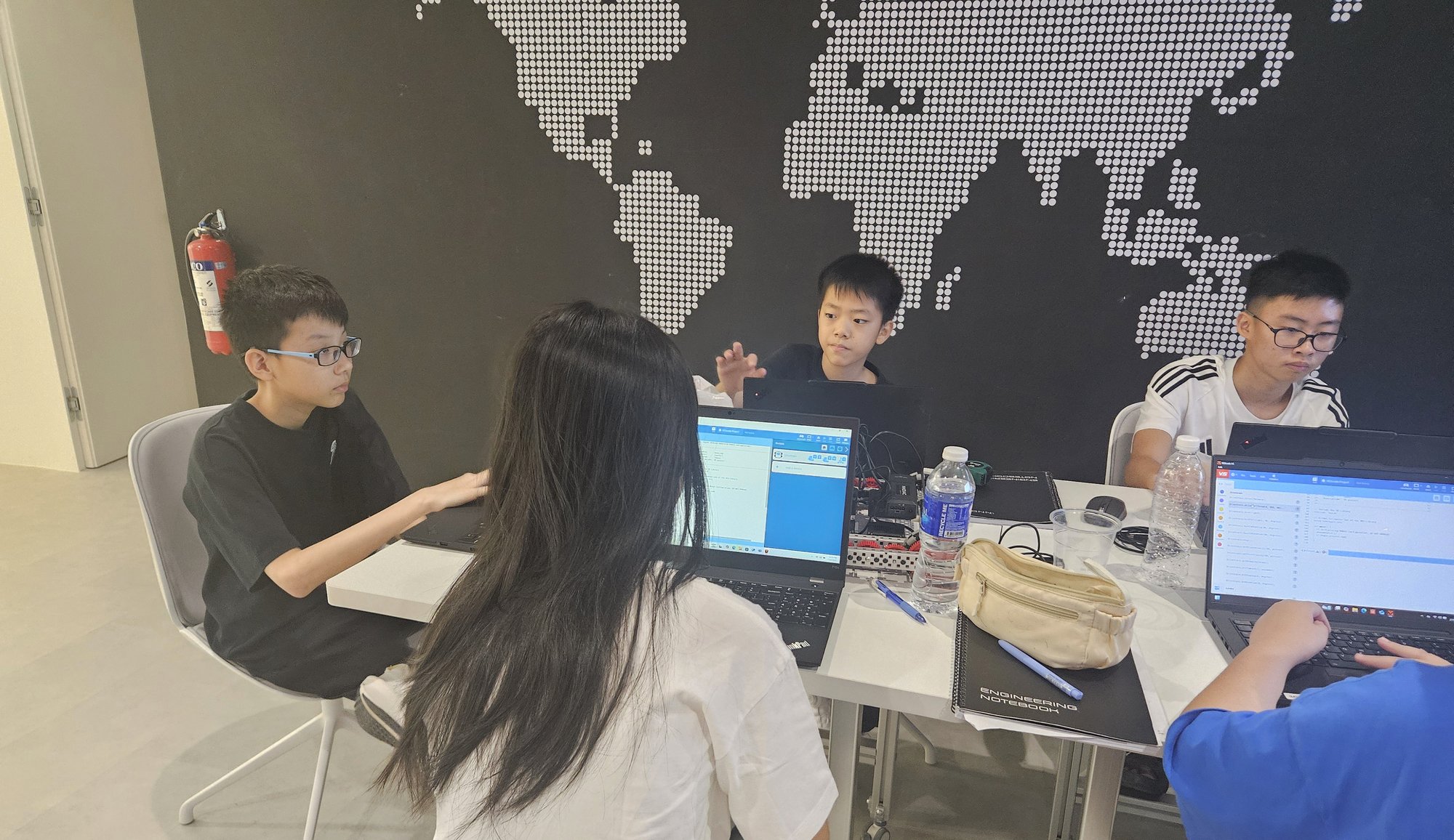
In today’s digital world, mastering the operation of software and digital systems is essential for success. Coding equips students with critical computational thinking skills that enable logical and structured problem-solving across various fields. Additionally, it empowers them to develop and optimize cutting-edge AI systems. By learning to code, students can innovate, customize algorithms, and seamlessly integrate AI into applications, driving efficiency and leading advancements in technology.
The Coding course is designed to introduce students to the essential skills of computer programming, blending theory with hands-on practice to build both confidence and competence. It offers a structured path from fundamental concepts to practical applications, preparing learners for academic, professional, or personal projects in technology.
Foundations of Programming
The course begins with core programming concepts, including variables, data types, control structures, and functions. Students learn how these building blocks form the logic of computer programs, gaining the ability to analyze problems and design step-by-step solutions.
Languages and Tools
Learners are introduced to widely used programming languages such as Python and JavaScript, chosen for their accessibility and relevance across industries. Alongside coding practice, students work with development environments, debugging tools, and version control systems like Git, equipping them with professional-level technical skills.
Problem-Solving and Projects
Problem-solving is central to the course. Students engage in coding exercises, algorithm design, and mini-projects that strengthen computational thinking. Through projects such as creating simple games, web applications, or data-driven programs, learners see how abstract concepts translate into practical outcomes.
Applications and Industry Relevance
Coding is at the heart of modern technology. This course highlights real-world applications, from web development and mobile apps to data science and automation. By connecting classroom exercises with industry practices, students understand the versatility of coding skills and their role in innovation.
Collaboration and Critical Thinking
Because coding often involves teamwork, the course emphasizes collaboration and communication. Group projects, code reviews, and peer discussions mirror professional development environments. Students also practice documenting their work, explaining their logic, and giving constructive feedback.
Outcomes and Future Pathways
By the end of the course, students will have developed practical coding skills, problem-solving strategies, and the confidence to continue learning independently. They will be prepared to pursue advanced topics in computer science, contribute to technology projects, or apply coding in fields such as business, design, and research. The portfolio of projects created during the course will showcase both technical ability and creative problem-solving.
The Coding course equips learners not just with technical skills, but with a mindset of curiosity, persistence, and innovation—qualities essential for success in the digital age.